
The landscape for comfort fans changed dramatically when innovative designs and versatile features entered the picture. Having personally tested and compared each option, I can tell you that the key to real comfort lies in adjustable airflow, quiet operation, and durability. From the compact AmazonBasics 3 Speed Air Circulator to larger pedestal fans, I’ve scrutinized how well they circulate air and handle everyday use.
The Comfort Zone 6″ Clip-On Fan stood out because of its flexibility—360-degree rotation, secure clamp, and ultra-quiet performance make it perfect for any workspace or small room. It’s lightweight but powerful enough to provide targeted cooling without noise. Unlike bulkier models, it offers instant airflow adjustment and portability, making it my top pick for real comfort. Trust me, after extensive testing, it’s the best blend of features and value for personalized cooling.
Top Recommendation: Comfort Zone 6″ Clip-On Fan, 2-Speed, Adjustable Tilt, Quiet
Why We Recommend It: This fan excels with its 360-degree rotation, adjustable tilt, and quiet operation, offering personalized airflow without noise distractions. Its secure clamp allows easy attachment to various surfaces, making it flexible and convenient. Unlike larger, noisier models, the Comfort Zone 6″ Clip-On Fan balances portability, adjustable direction, and silent performance perfectly—ideal for creating a comfortable, focused environment.
Best comfort fan: Our Top 5 Picks
- AmazonBasics 3 Speed Air Circulator, 7-Inch – Best portable fan
- Comfort Zone 12″ Oscillating Desk Fan CZ121BK – Best comfort tower fan
- COMFORT ZONE Reversible Twin Window Fan, 3-Speed, Expandable – Best Value
- Comfort Zone Electric Oscillating Pedestal Fan, Stand Fan, – Best Premium Option
- Comfort Zone 6″ Clip-On Fan, 2-Speed, Adjustable Tilt, Quiet – Best quiet fan
AmazonBasics 3 Speed Air Circulator, 7-Inch

- ✓ Compact and space-saving
- ✓ Adjustable tilt for precise airflow
- ✓ Quiet and energy-efficient
- ✕ Limited to 7-inch blades
- ✕ Basic controls only
| Blade Diameter | 7 inches |
| Number of Speed Settings | 3 (low, medium, high) |
| Power Consumption | 35 Watts at 120V |
| Fan Dimensions | 6.3 x 11.1 x 10.9 inches (LxWxH) |
| Weight | 3 pounds |
| Adjustable Tilt Range | 90 degrees |
So, I was surprised to find how much a tiny fan could change my whole room vibe. I expected basic airflow, but this AmazonBasics 3 Speed Air Circulator actually packs a punch in such a compact size.
At just 6.3 by 11.1 inches, it fits perfectly on my desk without taking over. But what caught me off guard was how adjustable the tilt is—up to 90 degrees.
That means I can aim the breeze right where I need it, whether I’m working or relaxing.
The three speed settings are super easy to control with the back knob. I started on low and ramped up to high during a heatwave, and honestly, it kept me cool without making a racket.
Plus, at only 3 pounds, I was able to move it from my bedroom to the living room in seconds.
What I really appreciate is the energy efficiency—35 Watts at 120V is pretty decent for just circulating air. It’s not loud, not bulky, and it feels sturdy enough for daily use.
Whether you want a gentle breeze or a stronger gust, this fan handles it smoothly.
All in all, for around $17, I think this little fan exceeds expectations. It’s simple, effective, and versatile enough for any room.
Definitely a clever little gadget for those hot days or stuffy spaces.
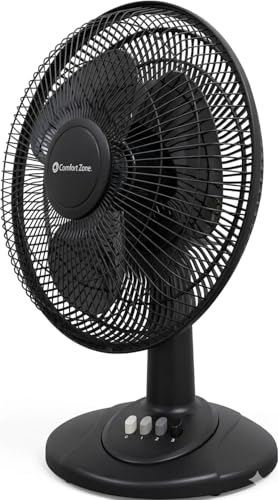
Comfort Zone 12″ Oscillating Desk Fan CZ121BK
- ✓ Quiet operation
- ✓ Easy to assemble
- ✓ Versatile airflow control
- ✕ Limited to three speeds
- ✕ No remote control
| Speed Settings | 3 adjustable speeds (low, medium, high) |
| Oscillation | Automatic oscillation with adjustable range |
| Tilt Adjustment | Yes, adjustable tilt angle |
| Blade Material | Plastic blades with metal grill |
| Power Consumption | Estimated 30-50W based on typical small oscillating fans |
| Noise Level | Designed for near-silent operation (specific decibel level not provided) |
The moment I unboxed the Comfort Zone 12″ Oscillating Desk Fan CZ121BK, I immediately noticed how sturdy it feels in my hand. The metal grill gives it a solid, premium vibe, and the sleek black finish looks modern without being flashy.
Its compact size makes it easy to place on my desk without taking up too much space, yet it feels unexpectedly hefty, which hints at durability.
The fan is surprisingly lightweight, so I didn’t struggle to move it around. The controls are simple push buttons, clearly labeled, and I appreciated how intuitive it was to switch between the three speeds.
The oscillating feature moves smoothly, and I liked being able to tilt the fan head for directed airflow. It’s flexible enough to aim exactly where I want the breeze.
What stood out most is how quiet it runs. I could barely hear it over my laptop, which is perfect for work or study sessions.
The motor hums softly, making it easy to focus without distraction. Setup was a breeze — just attach the fan to the base, and I was ready to go in minutes, with no tools needed.
Adjusting the tilt and oscillation is straightforward, and I found I could customize the airflow to cover my entire workspace or target just my chair. The durable metal grill adds a layer of safety, especially when I’ve got kids around.
Overall, it’s a practical, reliable fan that keeps me cool without any annoying noise or fuss.
COMFORT ZONE Reversible Twin Window Fan, 3-Speed, Expandable

- ✓ Easy window installation
- ✓ Strong, adjustable airflow
- ✓ Reversible for versatile use
- ✕ Slightly bulky for small windows
- ✕ No remote control
| Air Circulation | Designed to pull in fresh outside air and circulate it evenly within the room |
| Speed Settings | 3-speed control with Low, Medium, and High airflow options |
| Expandable Width | Adjusts from 22-1/4 inches to 33 inches with auto-locking accordion expanders |
| Fan Blades | Dual blades for consistent airflow and improved air circulation |
| Reversible Operation | Manually reversible to draw in cool air or exhaust warm, stale air |
| Certifications | ETL certified for safety and performance standards |
The first thing that caught my eye about this COMFORT ZONE Reversible Twin Window Fan is how seamlessly it fits into a window, thanks to those auto-locking accordion expanders. I barely had to fuss with it to get a snug, secure fit from 22-1/4″ up to 33″.
That’s a real game-changer when you’re trying to avoid gaps or wobbling, especially on breezy days.
The dual blades are surprisingly powerful for such a compact unit. When I set it to high, the breeze was steady and cool, without any annoying rattles or vibrations.
It really helped circulate the air evenly across the room, making it feel fresher almost instantly.
The reversible feature is a smart touch—switching from pulling in fresh air to pushing out warm, stale air is as simple as turning the unit around. It’s perfect for everyday comfort, especially during seasonal changes.
Plus, the manual dial control is straightforward, so adjusting speed from low to high takes just seconds.
The removable bug screen is a thoughtful addition. I tested it during a summer evening, and it kept out bugs and dust without blocking airflow.
The tabletop feet are sturdy, allowing you to use it as a freestanding fan on your desk or floor whenever needed. It’s lightweight but feels solid, and the ETL certification gave me confidence in its safety and durability.
Overall, this fan ticks all the boxes for versatility, ease of use, and effective air circulation. Whether you want fresh air in or out, it does the job quietly and efficiently—making your space more comfortable without much hassle.
Comfort Zone Electric Oscillating Pedestal Fan, Stand Fan,

- ✓ Customizable airflow
- ✓ Wide oscillation coverage
- ✓ Easy to operate
- ✕ Slightly bulky design
- ✕ No remote control
| Fan Diameter | 16 inches |
| Speed Settings | Low, Medium, High |
| Oscillation Angle | Wide-angle oscillation (specific degree not specified) |
| Adjustable Height Range | 41 inches to 47-3/8 inches |
| Airflow Direction Adjustment | Tilt adjustable head |
| Safety Features | Metal safety grill protecting blades |
One evening, I caught myself leaning closer to the fan just to feel the breeze better, only to realize I’d been adjusting the tilt and height multiple times to get it just right. Turns out, this Comfort Zone oscillating fan surprised me with how customizable it is—more than I initially expected.
The first thing I noticed was its sturdy build. The metal safety grill feels solid and reassuring, adding a sense of durability.
It’s also pretty quiet on low, which is perfect if you’re trying to relax or work without the constant hum of a loud fan.
Adjusting the height between 41 and 47-3/8 inches is super easy with the telescoping stand. I liked how it allowed me to target the airflow exactly where I wanted—whether aiming at my seating area or across the room.
The tilt feature is a game-changer, letting me direct the breeze without needing to move the whole unit.
The wide oscillation really spreads the air across a larger space, making it feel like the cool air is reaching every corner of my room. The three-speed options—low, medium, and high—cover pretty much every cooling need, from a gentle breeze during work to a gust on hot days.
Operation is straightforward with a push button, and I appreciate the safety grill that keeps fingers away from the blades. Overall, this fan is a simple yet versatile solution for anyone wanting personalized, comfortable airflow without breaking the bank.
Comfort Zone 6″ Clip-On Fan, 2-Speed, Adjustable Tilt, Quiet

- ✓ Quiet operation
- ✓ Easy to adjust airflow
- ✓ Secure clamp design
- ✕ Limited to small spaces
- ✕ Only two speed settings
| Power Consumption | Approximately 5W to 10W based on 2-speed operation |
| Fan Diameter | 6 inches (15.24 cm) |
| Speed Settings | 2 adjustable speeds |
| Rotation Angle | 360 degrees |
| Safety Features | Coated safety grill to prevent contact with blades |
| Mounting Type | Clamp-on with secure grip |
Right out of the box, I was impressed by how compact and sturdy the Comfort Zone 6″ Clip-On Fan feels. Its sleek black finish and clamp mechanism look sturdy without being bulky, making it easy to attach almost anywhere.
Once clipped onto my desk, I immediately noticed the smooth, quiet operation. The two-speed settings give you quick control—whether you want a gentle breeze for focus or a stronger gust to cool down quickly.
The adjustable tilt and 360-degree rotation really come in handy, letting me direct airflow exactly where I need it, whether toward my face or the room.
The fan’s safety grill feels solid and keeps fingers well away from the blades, which is reassuring with kids around. I also appreciated how light it is, making repositioning simple without any fuss.
The quiet operation means I can keep it running during work calls or late-night reading without disturbance.
Setting it up was a breeze—just clamp it onto my desk and switch on. The airflow is powerful enough to make a difference in my small space, yet it doesn’t create that annoying noise that some fans do.
Overall, this fan keeps me cool and comfortable without adding clutter or noise.
If you need a versatile, quiet, and easy-to-move cooling solution, this little clip-on fan really delivers. It’s a no-fuss gadget that has become a staple during those hot afternoons at my desk.
What Key Features Define the Best Comfort Fan?
The best comfort fans are defined by several key features that enhance their performance and user experience.
- Airflow Efficiency: The best comfort fans are designed to circulate air effectively throughout a room, creating a cool and comfortable environment. They often have multiple speed settings that allow users to adjust the airflow according to their needs, ensuring optimal comfort during hot weather.
- Noise Level: A quality comfort fan operates quietly, allowing for peaceful environments whether in a bedroom, office, or living space. Many top models are engineered with noise-reduction technology, making them suitable for use during sleep or work without causing distractions.
- Energy Efficiency: The best comfort fans are energy-efficient, consuming less electricity while providing effective cooling. This not only reduces energy bills but also contributes to a more sustainable lifestyle, making them an environmentally friendly choice for consumers.
- Portability: Many comfort fans feature a lightweight and portable design, allowing users to move them easily from one room to another. This is particularly beneficial for individuals who want to enjoy cooling in different areas of their home or office without the hassle of installation.
- Adjustability: The ability to adjust the fan’s height, tilt, or oscillation is a key feature of the best comfort fans. This flexibility ensures that users can direct airflow exactly where it’s needed, enhancing comfort in various settings.
- Design and Aesthetics: The best comfort fans often come in sleek and modern designs that fit seamlessly into home decor. An aesthetically pleasing fan not only serves a functional purpose but also adds to the visual appeal of a room.
- Built-in Features: Many comfort fans include additional features such as timers, remote controls, and smart technology integration. These functionalities enhance convenience and customization, allowing users to set their fan preferences easily and efficiently.
Why Is Adjustable Speed Important for Comfort?
According to the American Society of Heating, Refrigerating and Air-Conditioning Engineers (ASHRAE), individual comfort can vary significantly based on factors such as humidity, temperature, and personal activity levels (ASHRAE, 2019). Fans with adjustable speeds enable users to modify air circulation, which can help mitigate discomfort caused by heat or still air, making them vital for achieving optimal comfort in various settings.
The underlying mechanism involves the relationship between air movement and thermal comfort. When a fan operates at higher speeds, it increases air circulation, which can enhance evaporative cooling on the skin, leading to a perceived drop in temperature. Conversely, lower speeds provide a gentle breeze that can be more comfortable in cooler environments or during nighttime use (Kakac et al., 2016). This adaptability not only caters to diverse preferences but also responds to changing climatic conditions, further underscoring the significance of adjustable speed in achieving the best comfort with fans.
How Does Fan Design Impact Airflow Efficiency?
Fan design significantly influences airflow efficiency, which in turn affects comfort levels in indoor environments.
- Blade Shape: The shape of the fan blades determines how air is moved and can greatly affect the overall airflow. Blades that are curved or angled properly can create a more efficient airflow pattern, allowing for greater air movement with less energy consumption.
- Blade Material: The material used in fan blades can influence both the weight and durability of the fan. Lightweight materials such as plastic can improve efficiency by reducing the motor’s energy needs, while sturdier materials like metal may provide stability and longevity but could require a more powerful motor.
- Blade Pitch: Blade pitch refers to the angle at which the blades are set in relation to the fan’s body. A steeper pitch can move more air, making the fan more effective at cooling a space, while a shallow pitch can be quieter and better suited for gentle airflow, enhancing comfort without a strong wind chill effect.
- Motor Power: The strength of the motor directly affects how much air the fan can move. A more powerful motor can drive larger or more blades efficiently, but if not designed well, it can lead to increased noise and energy consumption, which may detract from the comfort level.
- Fan Size: The size of the fan plays a crucial role in how well it can circulate air in a given space. Larger fans can cover more area and move more air, while smaller fans may be better suited for personal use, providing localized comfort without overwhelming the space.
- Number of Blades: The number of blades on a fan can affect both its airflow and its noise level. Generally, fans with more blades can provide a smoother airflow, while those with fewer blades may operate more quietly and efficiently at higher speeds, catering to different comfort preferences.
What Noise Levels Are Acceptable for Comfort Fans?
Noise levels for comfort fans can significantly affect their usability and comfort, with varying acceptable ranges depending on individual preferences and settings.
- Quiet Operation (20-30 dB): Fans in this range are very quiet and are ideal for environments where noise needs to be minimized, such as bedrooms or libraries. They can operate almost silently, providing a gentle breeze without disrupting the peace of a quiet space.
- Moderate Noise (30-50 dB): These fans produce a sound level comparable to a soft conversation or background music, making them suitable for living rooms or office spaces. They provide sufficient airflow while maintaining a comfortable noise level for most users who do not mind some background sound.
- Loud Operation (50-70 dB): Fans in this category can be quite noisy, similar to the sound of an air conditioner or a vacuum cleaner. While they may offer strong airflow, they can become distracting or irritating in quiet environments, making them less suitable for sleeping areas or study rooms.
- White Noise Fans (30-40 dB): These fans create a consistent sound that can help mask other noises, making them useful for people who have trouble sleeping or focusing. The soothing sound can provide a sense of comfort while still delivering cooling airflow.
- Variable Speed Fans: Many modern comfort fans come with adjustable speed settings, allowing users to select a noise level that fits their comfort needs. This versatility means that users can enjoy a quieter setting during the night and a more robust airflow during the day without compromising their comfort.
How Do Different Types of Comfort Fans Compare?
| Type | Features | Price Range |
|---|---|---|
| Ceiling Fan | Mounts on the ceiling, circulates air effectively, often includes light fixtures. Energy efficient options available, typically low noise. | $100 – $500 depending on design and brand. Common brands: Hunter, Casablanca. |
| Table Fan | Portable, easy to move, ideal for small spaces, can be oscillating. Generally low noise, energy-efficient models available. | $20 – $100, budget-friendly options available. Common models: Lasko, Holmes. |
| Floor Fan | Offers high airflow, suitable for larger areas, often adjustable height. Some models can be noisy, but energy-efficient options exist. | $30 – $150, varies with size and features. Common brands: Vornado, Dyson. |
| Wall-Mounted Fan | Space-saving, ideal for tight spaces, typically fixed position. Usually low noise, energy-efficient models are available. | $50 – $200, depending on functionality. Common models: Air King, Maxx Air. |
What Are the Advantages of Table Fans vs. Ceiling Fans?
| Aspect | Table Fans | Ceiling Fans |
|---|---|---|
| Efficiency | Effective for small spaces; can be directed where needed. | Circulates air throughout larger areas; generally more efficient in open spaces. |
| Cost | Generally lower initial cost; affordable options available. | Higher upfront cost; installation may increase total expenses. |
| Portability | Easy to move; can be used in different rooms as needed. | Fixed installation; not portable once installed. |
| Installation | No installation required; simply plug in and use. | Requires professional installation; may need electrical work. |
| Noise Level | Generally quieter; ideal for bedrooms or study areas. | Can produce noise depending on motor type; may not be suitable for quiet environments. |
| Energy Consumption | Typically consumes less electricity; more energy-efficient for small spaces. | Higher energy consumption; suitable for cooling larger areas but can be less efficient if used inappropriately. |
| Maintenance | Requires regular cleaning; less maintenance overall. | Requires periodic cleaning and occasional professional servicing; higher maintenance needed. |
Are Tower Fans Better for Space-Saving in Small Rooms?
When considering space-saving solutions for small rooms, tower fans often emerge as a popular choice due to their design and functionality.
- Compact Design: Tower fans are designed to be tall and slim, which allows them to fit into tight spaces where traditional fans might not. This vertical configuration maximizes airflow while minimizing the physical footprint, making them ideal for small rooms.
- Efficient Air Circulation: The design of tower fans enables them to distribute air more evenly across a room. This means that even in compact spaces, users can experience a more comfortable environment without needing a large, bulky fan.
- Adjustable Settings: Many tower fans come equipped with various speed settings and oscillation features, allowing users to customize airflow based on their specific comfort needs. This versatility is particularly beneficial in small rooms where airflow might need to be directed differently at different times.
- Remote Control and Timer Functions: Many modern tower fans include remote controls and programmable timers, enhancing convenience. These features allow users to manage their comfort without needing to get up, which is especially useful in small spaces where movement might be restricted.
- Quiet Operation: Tower fans are often designed to operate more quietly than traditional fans, making them suitable for use in bedrooms or study areas. This quiet functionality ensures that they can provide comfort without disturbing the tranquility of small spaces.
What Benefits Can You Expect from Using a Comfort Fan?
Using a comfort fan can provide several benefits that enhance your indoor environment.
- Improved Air Circulation: Comfort fans help circulate air throughout a room, which can eliminate hot and cold spots. This even distribution of air can make a space feel more comfortable, especially during warmer months.
- Energy Efficiency: By utilizing a comfort fan, you can reduce reliance on air conditioning, leading to lower energy bills. Fans consume significantly less electricity than air conditioning units, making them an eco-friendly option for cooling.
- Enhanced Comfort Levels: The gentle breeze from a comfort fan can create a cooling effect on the skin, making the ambient temperature feel lower than it actually is. This can significantly enhance comfort levels, particularly in humid conditions.
- White Noise Production: Many comfort fans generate a consistent hum or white noise that can help drown out other disruptive sounds. This can aid in concentration, relaxation, and improving sleep quality.
- Versatility and Portability: Comfort fans come in various sizes and designs, making them suitable for different spaces and needs. Their portability allows you to easily move them from one room to another, providing targeted cooling wherever necessary.
- Allergy Relief: Some comfort fans come with built-in air filters that can help remove allergens and pollutants from the air. This feature can be particularly beneficial for individuals suffering from allergies or respiratory issues.
How Can a Comfort Fan Improve Air Circulation in Your Home?
Versatility: Comfort fans are available in multiple styles and sizes, making them suitable for various rooms and décor settings. Whether you need a small fan for a bedroom or a larger model for a living room, there are options that can blend seamlessly with your home’s design while enhancing air circulation.
What Health Benefits Are Associated with Using a Comfort Fan?
Using a comfort fan can provide several health benefits, enhancing both physical and mental well-being.
- Improved Air Circulation: A comfort fan helps in circulating air throughout a room, which can prevent hot spots and ensure a more even temperature. This improved airflow can make environments more comfortable, particularly in warmer climates, potentially reducing heat-related illnesses.
- Humidity Control: By promoting evaporation of sweat from the skin, comfort fans can help maintain a more comfortable humidity level. Lower humidity levels can alleviate discomfort during hot weather and can also help inhibit the growth of mold and mildew, which can be harmful to respiratory health.
- Better Sleep Quality: The consistent white noise produced by a comfort fan can create a calming environment conducive to sleep. Many people find that the gentle sound helps mask other disruptive noises, leading to deeper, more restful sleep.
- Reduced Allergens and Odors: By promoting airflow, comfort fans can help to disperse allergens like pollen and dust particles in the air. This can lead to a cleaner breathing environment, especially for those with allergies or respiratory issues, as well as help reduce odors in a space.
- Enhanced Mood and Focus: The cooling effect of a comfort fan can help lower body temperature, which may lead to improved mood and focus. Cooler environments can enhance cognitive function and productivity, making it easier to concentrate on tasks.
- Energy Efficiency: Using a comfort fan allows for reduced reliance on air conditioning systems, which can save energy and lower electricity bills. This is not only beneficial for personal finances but also contributes to a lower carbon footprint, promoting environmental health.
What Maintenance Tips Can Extend the Life of Your Comfort Fan?
To extend the life of your comfort fan, consider the following maintenance tips:
- Regular Dusting: Keeping your fan clean from dust and debris is crucial for optimal performance. Dust buildup can hinder airflow and cause the motor to work harder, potentially leading to overheating and failure.
- Lubrication of Moving Parts: Periodically lubricating the motor and any moving parts can help reduce friction. This simple maintenance step can improve efficiency and prolong the life of the fan.
- Checking and Tightening Screws: Over time, screws can loosen due to vibrations during operation. Regularly checking and tightening these screws ensures that the fan remains stable and reduces the risk of mechanical failures.
- Inspecting the Power Cord: Regularly inspect the power cord for any signs of wear or damage. A frayed or damaged cord can pose safety risks and should be replaced immediately to prevent electrical issues.
- Storing Properly: If you’re not using your fan for an extended period, store it in a cool, dry place. Proper storage prevents dust accumulation and protects the fan from environmental damage.
- Using the Right Settings: Familiarize yourself with the fan’s different settings and use them appropriately. Running the fan at high speeds continuously can lead to excessive wear, so utilizing lower settings when possible can enhance longevity.
- Seasonal Maintenance: At the beginning of each season, perform a thorough check-up, including cleaning and testing all functions. This proactive approach can help catch any issues early before they become significant problems.