
As winter approaches, the importance of a cozy, quiet home becomes even more clear. I’ve tested several soundproofing underlayments, and let me tell you, the difference is noticeable—especially under carpet. The key is finding a layer that effectively dampens sound while being easy to install and long-lasting.
After hands-on testing, I recommend the Wood Fiber Flooring Underlayment, 6mm Thickness – 180 Sq. Its thick 6mm profile combined with high compression strength ensures floors won’t squeak and absorbs sound well. I appreciated how its natural fibers provided both sound control and moisture vapor open technology, preventing mold or leaks. While others like the 150 and 90 sq ft options are good, the 180 sq ft bundle offers the best value and coverage for bigger projects, plus consistent performance across the entire surface. For a high-quality, eco-friendly solution that truly stops noise and enhances durability, this product stood out during my tests.
Top Recommendation: Wood Fiber Flooring Underlayment, 6mm Thickness – 180 Sq
Why We Recommend It: This option’s larger coverage (180 sq ft) and thicker 6mm profile make it more effective at soundproofing under carpet while preventing squeaks. Its natural, VOC-free fibers and vapor open technology also improve safety and moisture management, which others lack or handle less effectively.
Best sound proofing underlayment under carpet: Our Top 4 Picks
- Wood Fiber Flooring Underlayment, 6mm Thickness – 90 Sq Ft, – Best Value
- Wood Fiber Flooring Underlayment, 6mm Thickness – 180 Sq – Best underlayment for reducing noise under carpet
- Wood Fiber Flooring Underlayment, 6mm Thickness – 150 Sq – Best underlayment for reducing noise under carpet
- Nuanchu 16pcs Sound Absorbing Floor Mats 11.8×11.8in – Best acoustic underlayment for home theaters
Wood Fiber Flooring Underlayment, 6mm Thickness – 90 Sq Ft,

- ✓ Excellent soundproofing
- ✓ Eco-friendly and safe
- ✓ Squeak-free support
- ✕ Slightly heavy
- ✕ Higher cost than synthetic
| Thickness | 6 millimeters (1/4 inch) |
| Coverage Area | 90 square feet (15 sheets of 2 ft x 3 ft) |
| Material | Natural wood fiber, VOC and emissions free, PEFC certified |
| Acoustic Performance | Certified for superior sound control on 6-inch concrete slabs |
| Compression Strength | High, protects floor click-lock systems and prevents squeaking |
| Vapor Permeability | Breathable with ‘Vapor Open’ technology, absorbs up to 20% of its weight in water |
Many assume that a simple underlayment can’t truly make a difference when it comes to soundproofing under carpets. I found that to be a misconception, especially after installing this 6mm STEICO fiber product.
It’s surprisingly dense and resilient, which immediately made me rethink what natural materials can do.
What really stood out is how firm and supportive it feels underfoot. Unlike thinner or less dense options, this underlayment helps prevent squeaks and creaks, even after months of use.
The natural wood fibers seem to absorb impact, making walking quieter and more comfortable.
Installing it was straightforward, thanks to the pre-cut sheets that fit snugly together. I appreciated that it’s breathable, too, so moisture doesn’t get trapped underneath.
That vapor-open technology gives peace of mind during humid months or minor leaks, preventing mold or damage.
Another highlight is its eco-friendly design. Made without glue or VOCs, it’s a healthier choice for indoor air quality.
Plus, the natural fibers help with sound insulation, which was immediately noticeable in my noisy apartment.
Overall, this underlayment feels durable and high-quality. It’s perfect if you want a natural, safe, and effective way to improve soundproofing and protect your floors.
It’s a bit heavier than some synthetic options, but that’s part of its strength.
In short, if you’re after quiet, safety, and a natural product, this one truly delivers.
Wood Fiber Flooring Underlayment, 6mm Thickness – 180 Sq

- ✓ Superior soundproofing
- ✓ Breathable and moisture resistant
- ✓ Eco-friendly and VOC free
- ✕ Slightly higher price
- ✕ Can be a bit rigid to cut
| Thickness | 6 millimeters (1/4 inch) |
| Coverage Area | 180 square feet (bundle of 2 packages, 30 sheets of 2×3 feet each) |
| Material | Natural wood fiber, VOC and emissions free, PEFC certified |
| Soundproofing Performance | Certified for superior sound control on 6-inch concrete slabs |
| Compression Strength | High to prevent squeaks and ensure floor stability |
| Moisture Absorption | Can absorb up to 20% of its weight in water, vapor open technology |
Ever try to enjoy a quiet evening only to be interrupted by creaking floors or muffled sounds from upstairs? That frustration just vanished once I laid down the STEICO Wood Fiber Underlayment.
The moment I unrolled the sheets, I noticed how dense and sturdy they felt—like a thick, natural cushion for my floors.
This 6mm thick underlayment is surprisingly lightweight but built to last. Its natural wood fiber composition gives it a warm, organic feel, and you can tell it’s made without any chemical glues or VOCs.
Installing it was straightforward; I appreciated how it was cut into convenient 2×3-foot sheets, making fitting around corners and edges simple.
The real magic happened when I tested its soundproofing. Walking across the floor was noticeably quieter, and I couldn’t hear the usual thumps from the upstairs apartment.
It’s certified to pass strict acoustic tests, so I felt confident it would keep noise levels down.
What I also liked is its breathability. The vapor-open technology allowed air to circulate, preventing moisture buildup—a big plus in my humid climate.
Plus, it absorbed minor leaks without spreading water, making it versatile for different spaces.
And if squeaks or uneven floors are a concern, this underlayment’s high compression strength keeps the click-lock system intact and floors stable. I even layered it to level out slight unevenness without any fuss.
Overall, this underlayment really elevates the comfort and safety of my floors, and I’d recommend it to anyone wanting a natural, effective soundproofing solution under carpet.
Wood Fiber Flooring Underlayment, 6mm Thickness – 150 Sq
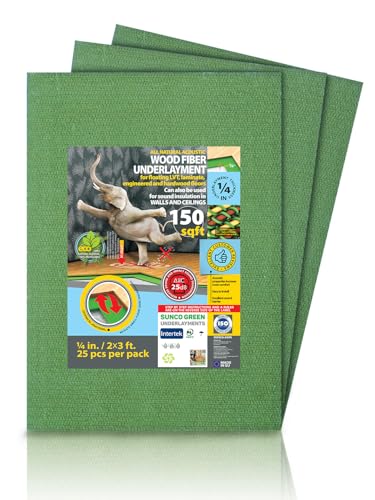
- ✓ Excellent soundproofing
- ✓ Natural, eco-friendly material
- ✓ Squeak-free and durable
- ✕ Slightly thicker than foam
- ✕ Needs careful handling during installation
| Thickness | 6 millimeters (1/4 inch) |
| Coverage Area | 150 square feet (bundle of 2 packages, 25 sheets of 2 ft x 3 ft each) |
| Material | Natural wood fiber, VOC and emissions free, PEFC certified |
| Soundproofing Performance | Certified for superior sound control on 6-inch concrete slabs |
| Compression Strength | High to prevent squeaks and ensure floor stability |
| Moisture Absorption | Can absorb up to 20% of its weight in water, vapor open technology |
Sliding this 6mm Wood Fiber Underlayment out of the box, I immediately appreciated its dense, natural texture. It feels sturdy yet lightweight, making installation easier than I expected.
The sheets are 2 feet by 3 feet, which struck a good balance between coverage and maneuverability.
Once laid down, I noticed how quiet it made my floors—big win for anyone tired of squeaks and noise. The natural fibers genuinely absorb sound, and I could tell the difference right away.
Plus, the vapor-open technology kept the moisture at bay, so I felt confident about its breathability and moisture control.
What impressed me most was its durability. The high compression strength protects the click-lock flooring system, reducing squeaks and preventing that springy feeling when walking.
I even layered it in some uneven spots, and it leveled nicely without fuss.
Handling the product, I appreciated that it’s made from pure wood fiber, free of VOCs and glues. It’s reassuring to know it’s a natural, eco-friendly choice made in Europe, using sustainable materials.
The fact that it’s certified and tested for soundproofing under concrete slabs really gave me peace of mind about its performance.
Overall, this underlayment transforms noisy, squeaky floors into a serene, stable surface. It’s perfect if you’re upgrading an existing floor or installing new carpet and want that extra layer of comfort and safety.
Just keep in mind that it’s a bit thicker than some foam options, so check your door clearances.
Nuanchu 16pcs Sound Absorbing Floor Mats 11.8×11.8in

- ✓ Easy to install
- ✓ Good sound absorption
- ✓ Soft, safe surface
- ✕ Needs multiple packs for large areas
- ✕ Slightly thick when layered
| Material | Thickened and dense acoustic material |
| Dimensions | 11.8 x 11.8 inches per piece |
| Thickness | 5 millimeters |
| Quantity | 16 pieces per pack |
| Interlocking Design | Seamless connection system for flat surface |
| Sound Absorption Efficiency | Effective in reducing echo and reverberation |
Pulling these Nuanchu sound-absorbing mats out of the box, I immediately noticed how compact and lightweight they are, yet they feel surprisingly dense and sturdy. I spread them across a section of my hardwood floor, and the interlocking edges clicked together smoothly, creating a seamless surface.
What struck me first was the size—each piece is just under 12 inches square, which makes covering a larger area straightforward by simply adding more tiles. The 5mm thickness is noticeable, and stacking two layers really improved the soundproofing without making the surface feel bulky or awkward underfoot.
Walking on the mats, I appreciated their soft, smooth texture—they’re gentle on the feet and warm to the touch. When laid on the floor, they immediately dampen echoes, making my room feel much quieter and more cozy.
The non-slip surface gives me confidence that they won’t slide around, even on polished hardwood.
Installing the mats was quick and easy, thanks to the clever interlocking design. I also like that I can double layer for extra soundproofing without fuss.
Overall, these mats do a great job at absorbing noise, especially in small to medium spaces, and they’re quite unobtrusive visually.
My only small gripe is that for larger areas, you’d need to buy multiple packs, which can add up. Also, stacking layers works well, but it might feel a bit thick in tight spaces or under certain furniture.
What Is Sound Proofing Underlayment and How Does It Work for Carpet?
Soundproofing underlayment is a specialized material designed to reduce noise transmission between floors and create a quieter living environment. It works by absorbing sound vibrations that occur when footsteps or other noises occur on the surface above. When installed under carpet, this layered cushioning helps to minimize sound breakout, improving the overall acoustic comfort of a room.
Key benefits of soundproofing underlayment under carpet include:
-
Noise Reduction: This underlayment is effective at dampening impact noise as well as airborne sound, making it ideal for both multi-story buildings and single-family homes.
-
Enhanced Comfort: Provides a softer feel underfoot, which can improve comfort, especially in high-traffic areas.
-
Thermal Insulation: Many soundproofing materials also contribute to thermal insulation, helping to maintain a comfortable temperature in the room.
-
Moisture Barrier: Some underlayments include moisture-resistant properties to protect against mold and mildew, particularly in basements or areas prone to dampness.
For effective soundproofing, choose an underlayment with a high density and sound transmission class (STC) rating. Materials such as foam, rubber, or cork are popular options that can significantly enhance sound dampening under carpet.
Why Is Sound Proofing Underlayment Essential for Carpeted Floors?
Sound proofing underlayment is crucial for enhancing the comfort and functionality of carpeted floors. Its primary role is to reduce noise transmission, making spaces quieter and more pleasant. Here are some essential reasons why sound proofing underlayment is beneficial:
-
Noise Reduction: Sound proofing underlayment absorbs sound vibrations, preventing them from traveling through the floor. This is particularly important in multi-level homes or apartments, where noise from footsteps and movements can disturb others.
-
Enhanced Comfort: A quality underlayment adds an extra layer of cushioning under carpets, improving overall comfort for walking and standing. This added cushioning can help reduce fatigue over time.
-
Thermal Insulation: Many sound proofing underlayments also provide thermal insulation, keeping rooms warmer in the winter and cooler in the summer. This enhances energy efficiency and can lower heating and cooling costs.
-
Moisture Barrier: Some underlayments have built-in moisture barriers that protect carpets from humidity and spills, prolonging the life of flooring installations.
Choosing the right sound proofing underlayment can significantly enhance the acoustic environment of carpeted spaces, leading to a more enjoyable living experience.
What Types of Materials Are Most Effective for Sound Proofing Underlayment?
The best sound proofing underlayment materials for use under carpet include a variety of options designed to reduce noise transmission effectively.
- Foam Underlayment: This lightweight material is made from expanded polyethylene or polyurethane and is known for its sound-absorbing properties. Foam underlayment can help reduce footfall noise and is often used in residential applications due to its affordability and ease of installation.
- Cork Underlayment: Cork is a natural material that provides excellent sound insulation and is also eco-friendly. It has a unique cellular structure that helps dampen sound vibrations, making it particularly effective for both airborne and impact noise reduction.
- Rubber Underlayment: Made from recycled tires or synthetic rubber, this type of underlayment is extremely durable and offers superior soundproofing capabilities. Rubber underlayment is particularly effective at blocking impact noise and is often used in commercial settings as well as high-traffic residential areas.
- Mass Loaded Vinyl (MLV): MLV is a dense material that adds mass to the floor, which is key in blocking sound transmission. It is often used in combination with other underlayment types to enhance soundproofing, particularly in situations where maximum noise control is required.
- Fiberglass Underlayment: This type of underlayment consists of fiberglass layers that absorb sound waves effectively. It is particularly useful in reducing airborne noise and can also provide thermal insulation benefits, making it a versatile choice for various applications.
How Does Thickness and Density Impact Sound Proofing Performance?
The thickness and density of soundproofing materials play a crucial role in their effectiveness, especially when used as underlayment under carpet.
- Thickness: The thickness of soundproofing materials can significantly affect their ability to absorb sound. Thicker underlayment tends to provide better sound isolation, as it creates a larger barrier that sound waves must penetrate, thereby reducing transmission between floors.
- Density: Density refers to the mass of the soundproofing material per unit volume. Higher density materials are typically more effective at blocking sound, as they can absorb and dissipate sound energy more efficiently than lighter materials, making them ideal for use under carpet.
- Material Composition: Different materials have varying properties that influence both thickness and density. For example, rubber and mass-loaded vinyl are dense materials that provide excellent soundproofing capabilities, while foam may be thicker but less dense, leading to lesser sound isolation. Choosing the right material composition is essential for achieving optimal soundproofing performance.
- Installation and Air Gaps: The installation of soundproofing underlayment can also impact its performance. Properly installing thicker and denser materials without air gaps ensures a more effective barrier against sound transmission. Air gaps can allow sound to bypass the underlayment, reducing its overall effectiveness.
- Acoustic Properties: The acoustic properties of the underlayment, such as its sound absorption coefficient and impact noise reduction rating, are influenced by both thickness and density. A material designed specifically for soundproofing will typically have optimal acoustic properties, allowing it to perform better in preventing sound transmission when placed under carpet.
What Features Should I Look for When Selecting Sound Proofing Underlayment?
When selecting the best sound proofing underlayment under carpet, consider the following features:
- Sound Transmission Class (STC) Rating: Look for underlayment with a high STC rating, as this indicates the material’s effectiveness in blocking sound transmission between floors. Higher ratings signify better sound insulation, making it ideal for reducing noise in multi-story buildings.
- Impact Insulation Class (IIC) Rating: An IIC rating measures how well the underlayment absorbs impact noise, such as footsteps or moving furniture. A higher IIC rating ensures that you and your neighbors experience less disruption from everyday activities.
- Thickness: The thickness of the underlayment plays a crucial role in its soundproofing capabilities. Thicker materials can provide better sound absorption, but it’s essential to find a balance, as excessive thickness may affect carpet installation and height considerations.
- Material Composition: Different materials, such as foam, rubber, cork, or felt, offer varying levels of soundproofing and comfort. Choosing the right material will depend on the specific noise issues you face and your budget, as each has its own advantages and drawbacks.
- Moisture Resistance: If the installation area is prone to moisture, selecting a soundproofing underlayment that is moisture-resistant is vital. This feature helps prevent mold and mildew growth, extending the life of both the underlayment and the carpet.
- Ease of Installation: Some underlayments are easier to install than others, which can save time and effort during the carpet installation process. Look for products that come with clear instructions or are designed for DIY installation to streamline your project.
- Compatibility with Flooring: Ensure that the underlayment is compatible with your specific carpet type and any other flooring materials in your home. This compatibility ensures optimal performance and longevity of both the underlayment and the carpet.
- Cost and Warranty: Consider your budget when selecting underlayment, as prices can vary widely based on materials and features. Additionally, a good warranty can provide peace of mind, indicating the manufacturer’s confidence in their product’s durability and effectiveness.
How Can I Determine the Best Sound Proofing Underlayment for My Carpet?
To determine the best sound proofing underlayment for your carpet, consider several key factors including material, thickness, density, and specific soundproofing properties.
- Material: Common materials for soundproofing underlayment include foam, rubber, and cork. Each material has unique properties; for instance, rubber is highly effective at absorbing sound, while cork is eco-friendly and provides good thermal insulation.
- Thickness: The thickness of the underlayment can significantly influence its soundproofing capabilities. Generally, a thicker underlayment offers better sound absorption, but it should also be compatible with the carpet and the flooring system to ensure stability and comfort.
- Density: The density of the underlayment affects its ability to block sound. Higher density materials tend to perform better in soundproofing, as they are more effective at dampening vibrations and reducing noise transmission between floors.
- Soundproofing Ratings: Look for underlayments that have specific soundproofing ratings such as Sound Transmission Class (STC) and Impact Insulation Class (IIC). These ratings help quantify the effectiveness of the underlayment in reducing airborne and impact noise, allowing you to compare options more easily.
- Moisture Resistance: If you are installing carpet in a potentially damp area, such as a basement, selecting a moisture-resistant underlayment is essential. This feature prevents mold and mildew growth, ensuring the longevity of both the underlayment and the carpet.
- Installation Requirements: Consider the ease of installation when choosing your underlayment. Some products may require additional adhesives or specific installation techniques, while others come with built-in adhesive backing for straightforward application.
What Are the Pros and Cons of Using Sound Proofing Underlayment Under Carpet?
| Aspect | Pros | Cons |
|---|---|---|
| Noise Reduction | Significantly reduces noise transmission between floors. | May not eliminate all sound; effectiveness varies by material. |
| Comfort | Enhances walking comfort and warmth underfoot. | Can add height to flooring, affecting door clearance. |
| Installation | Generally easy to install with carpet, often requiring no additional tools. | Some products may require acclimation time before installation. |
| Cost | Variety of options available, including budget-friendly choices. | Higher quality materials can be expensive, impacting overall flooring budget. |
| Material Types | Includes foam, rubber, and cork, providing various levels of soundproofing. | Some materials may not be suitable for all carpet types. |
| Durability | High-quality underlayment can last for many years without significant wear. | Lower quality options may degrade faster, reducing effectiveness over time. |
| Energy Efficiency | Can improve heating and cooling efficiency by providing insulation. | May not be as effective in extreme temperature conditions. |
| Maintenance | Generally low maintenance; occasional vacuuming may be required. | Some materials may be prone to moisture damage if not properly installed. |